Primarily, I will be analysing the functionality, organisation and effectiveness of them individually.
Firstly, I will analytically evaluate the storyboard coherent to the Video Game.
Throughout the planning, I developed a significant understanding of the specific functions and features which contribute to the overall effectiveness of the product, which developers must take into account such as informative grammatical contributions and imagery-based development.


I found this template the most effective in transporting vital creative information, such as camera movements, shot types, angles etc.
Saliently, the number of cells per page (6) constructed organisational fluency which allows for illustration and visual direction to be conveyed effectively and methodically. The spacial awareness between the cells also contributed to the fluency by enabling the orthographical presentation of shot transitions. This fluency gave rise to the genre of 1980's arcade visualisation; the directionality of the panning shot transitions from left to right.
Initially, the cell size, at first glance eluded my visual imagination as it may have prohibited the illustrative purpose of the storyboard. However, once in practice, the spatial awareness of each individual cell was indeed not limiting, yet enhancing
 individual creativity and vital information that is primarily needed.
The organisational purpose of this format was appealing enough to enhance my imagery and convey literary information such as description lines to write shot numbers, similarly at the top right which allowed me to orthographically create the scene, or in this case the level.
The spacial size of the description box underneath each cell is comfortable to exercise descriptive content which gives weight to the illustration above. Through a combination of the descriptive box and cell size, it conveniently worked effectively to create the video game design. The lack of orthographical space is compensated for in illustrative techniques for camera angels and directionality etc.
In conclusion, I found this template effective once I began utilising its assets in a way in which I could correctly convey the professional conventions that a storyboard artist retains. A snowballed effect to that, accumulated a smart and organised storyboard that perfectly transmits the information towards a developer.
To improve this template, an addition of a box in the middle of the cell structures for transitional information would have been more effective instead of using the illustrative space to include these details. It did not hinder my visual development but it would look more professional and aid the crew in collecting the information easier which would boost effectiveness.
Music Video
Initially, the recognition of two cells per page gave individuality to this storyboard which worked significantly well in the creation of my production. To purposefully execute this production, I aimed for extremely stylised visualisation which the significant space for illustration allowed for arrow directionality to show character movements, camera movements and even plotting if there was ever a change in focus.
Just like the Game storyboard, there was a little space between each cell allowing me to inform the crew that there will be either a cut or any other transitions that would occur such as the panning transition which was indicated by literary structures and arrows inside the cell. Although orthographical description and information is an enabling feature on a storyboard, especially the efficiency of filming, the main execution is the illustration and imagery to visualise to crew and director, thereby driving production efficiency forward. However, I wrote down all information that was drawn so that there was a written copy of the formation of the sketched arrows and diagrams inside the cell. Since beginning the storyboard assignment, I found that it is most effective when the use of imagery is paired with the lexical structures underneath the sketches. There are arrows to show a zoom out at the corners of the cell but it is also further enforced by the words 'Zoom out' underneath the cell.
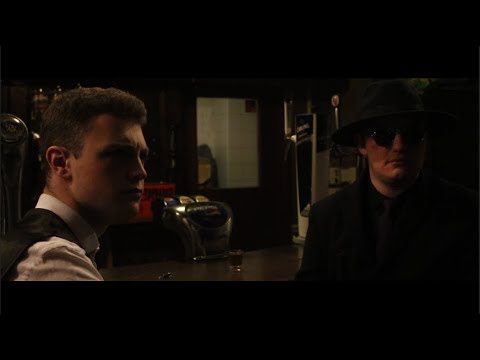
In my planning, I knew that I wanted all the different productions to take place in pubs, and since I went location scouting for the film prior to this assignment, it was easy to alter the environment of the pub to fit each production. But, I aimed for the music video and the storyboard to have little to no difference between their set as this creates synergy between the two productions, as they are adaptations.
So using these photos I knew how to plan the set; the positioning of cameras and equipment aiding in planning and sketching the storyboard as I had a visual reference to build on.
Film Storyboard

The Film storyboard was one of my most favourite yet stressful part of the production, just like the others i saw the film come to life on the page, imagining the movements and seeing the narrative displayed cell by cell. But for the short film, there were over 100+ shots that I had to draw, but I powered through, battling the voice inside my head telling me to stop and reminding myself constantly that it needed to be done. On my past short films I never dedicated any hard work to a storyboard, I learnt the hard way that if you go shooting without anyone else knowing the plan for the shots and not even you yourself knowing fully what you want to capture, your production will not be what you wanted.
This storyboard was pieced together from different templates I drafted on, compiling of different needs to the pre-production, getting across what we wanted to film and making sure that everyone on set, whether they are behind or in front of the camera, to know what exactly we are wanting to achieve.

This is my storyboard, these will be brought on set for everyone to have a look at, the labelling is made in shot order meaning that i have to tell people what shot we are going to film and they can easily find it, evaluate what is needed to happen then begin playing their part in the production.
On the left, we see that there is the sketch of the shot, with arrows to connotate for camera movement or character movement. This imagery is furthermore structured by the description of the shot to the right of the cell. The description states what type of shot it is so that my crew and I can easily set-up for it if there is any dialogue that takes place in the, it is stated by quotation marks, this allows the crew to also set up the sound equipment to suit the shot and work around the environment and other equipment.
 Also, the description of the shot gives more insight to what the actor may be doing such as how their faces should be pulled or what emotion they should be broadcasting to the audience, this gives the actor more information about their character, in doing this alongside the script they can know there lines and also correct their body language to help furthermore drive the narrative. I see this as a good way to have the director informs each actor on how they want them to act if its a very specific type of movement or dialogue without the director having to speak individually to all the actors, but then on set if any of them have a problem with the information they can easily just ask to be told it in person. But for the majority of the shots, there should be enough description on what the actor should be saying and/or doing thanks to the descriptions and sketches.
The shot type is also shown above the description, this
 allows the crew to set up the shot in an efficient way, the set is drawn using location pictures so what you see on the page is what you see in the bar, doing this also helped in producing the storyboards as the consideration for equipment placement was made and allowed us to plan the shots in a realistic way. This saves time on set because you have already worked out what elements can obstruct the production and it is good to have a backup plan just in case.
In shot 55 of scene three, the storyboard calls for a close-up shot of Spencer, but the arrows between Benjamin and Spencer indicate to the crew that there needs to be a switch in focus. By evaluating this cell we know by the direction of which the arrow is pointing that the focus shall shift from Spencer to Benjamin.

 If you notice there is shading done on the sketches, I included the shading for a few reasons, the first one being that I thought it made the work look a lot more presentable and artistic. The other reason was that I used it to indicate where the light source would be coming from, this will help further in setting up shots as we could set the lights up to fit the need of the director. Some light sources will be consistent throughout the film such as the bar lights and the lights from behind the bar, the shots were drawn with the idea in mind that we do not want to see the shadow of the equipment on the actors at any time because this will alter the way the audience takes in the scene and makes them lose grip on the story as they get pulled back to reality, remembering that this is a film. I do not want this to be the case in my film, this film is aimed to be an immersive experience for the audience so every shot was planned so that you would not be able to the see any shadows broadcasted from any equipment what so ever.
We also included a description of the sounds that would be heard in the film, stating if they were non-diegetic or diegetic, this helps the crew establish if they need to worry about recording such sound, or if it would be added in post.


At the end of this assignment, I learnt many things, also enhancing and developing my skills as a filmmaker. As a result, I believe that I can do storyboards for a range of productions, understanding the needs that are to be met and learning that it is all about helping the cast and crew. In the film, everyone plays a role and it works best if everyone understands fully what is needed, to get everyone on the same page can help drive production and increase productivity and I truly believe that without a storyboard, achieving those things will be incredibly hard to.
Saliently, the number of cells per page (6) constructed organisational fluency which allows for illustration and visual direction to be conveyed effectively and methodically. The spacial awareness between the cells also contributed to the fluency by enabling the orthographical presentation of shot transitions. This fluency gave rise to the genre of 1980's arcade visualisation; the directionality of the panning shot transitions from left to right.
Initially, the cell size, at first glance eluded my visual imagination as it may have prohibited the illustrative purpose of the storyboard. However, once in practice, the spatial awareness of each individual cell was indeed not limiting, yet enhancing
 individual creativity and vital information that is primarily needed.
The organisational purpose of this format was appealing enough to enhance my imagery and convey literary information such as description lines to write shot numbers, similarly at the top right which allowed me to orthographically create the scene, or in this case the level.
The spacial size of the description box underneath each cell is comfortable to exercise descriptive content which gives weight to the illustration above. Through a combination of the descriptive box and cell size, it conveniently worked effectively to create the video game design. The lack of orthographical space is compensated for in illustrative techniques for camera angels and directionality etc.
In conclusion, I found this template effective once I began utilising its assets in a way in which I could correctly convey the professional conventions that a storyboard artist retains. A snowballed effect to that, accumulated a smart and organised storyboard that perfectly transmits the information towards a developer.
To improve this template, an addition of a box in the middle of the cell structures for transitional information would have been more effective instead of using the illustrative space to include these details. It did not hinder my visual development but it would look more professional and aid the crew in collecting the information easier which would boost effectiveness.
Music Video
Initially, the recognition of two cells per page gave individuality to this storyboard which worked significantly well in the creation of my production. To purposefully execute this production, I aimed for extremely stylised visualisation which the significant space for illustration allowed for arrow directionality to show character movements, camera movements and even plotting if there was ever a change in focus.
Just like the Game storyboard, there was a little space between each cell allowing me to inform the crew that there will be either a cut or any other transitions that would occur such as the panning transition which was indicated by literary structures and arrows inside the cell. Although orthographical description and information is an enabling feature on a storyboard, especially the efficiency of filming, the main execution is the illustration and imagery to visualise to crew and director, thereby driving production efficiency forward. However, I wrote down all information that was drawn so that there was a written copy of the formation of the sketched arrows and diagrams inside the cell. Since beginning the storyboard assignment, I found that it is most effective when the use of imagery is paired with the lexical structures underneath the sketches. There are arrows to show a zoom out at the corners of the cell but it is also further enforced by the words 'Zoom out' underneath the cell.
In my planning, I knew that I wanted all the different productions to take place in pubs, and since I went location scouting for the film prior to this assignment, it was easy to alter the environment of the pub to fit each production. But, I aimed for the music video and the storyboard to have little to no difference between their set as this creates synergy between the two productions, as they are adaptations.
So using these photos I knew how to plan the set; the positioning of cameras and equipment aiding in planning and sketching the storyboard as I had a visual reference to build on.
Film Storyboard

The Film storyboard was one of my most favourite yet stressful part of the production, just like the others i saw the film come to life on the page, imagining the movements and seeing the narrative displayed cell by cell. But for the short film, there were over 100+ shots that I had to draw, but I powered through, battling the voice inside my head telling me to stop and reminding myself constantly that it needed to be done. On my past short films I never dedicated any hard work to a storyboard, I learnt the hard way that if you go shooting without anyone else knowing the plan for the shots and not even you yourself knowing fully what you want to capture, your production will not be what you wanted.
This storyboard was pieced together from different templates I drafted on, compiling of different needs to the pre-production, getting across what we wanted to film and making sure that everyone on set, whether they are behind or in front of the camera, to know what exactly we are wanting to achieve.

This is my storyboard, these will be brought on set for everyone to have a look at, the labelling is made in shot order meaning that i have to tell people what shot we are going to film and they can easily find it, evaluate what is needed to happen then begin playing their part in the production.
On the left, we see that there is the sketch of the shot, with arrows to connotate for camera movement or character movement. This imagery is furthermore structured by the description of the shot to the right of the cell. The description states what type of shot it is so that my crew and I can easily set-up for it if there is any dialogue that takes place in the, it is stated by quotation marks, this allows the crew to also set up the sound equipment to suit the shot and work around the environment and other equipment.

The shot type is also shown above the description, this

In shot 55 of scene three, the storyboard calls for a close-up shot of Spencer, but the arrows between Benjamin and Spencer indicate to the crew that there needs to be a switch in focus. By evaluating this cell we know by the direction of which the arrow is pointing that the focus shall shift from Spencer to Benjamin.

 If you notice there is shading done on the sketches, I included the shading for a few reasons, the first one being that I thought it made the work look a lot more presentable and artistic. The other reason was that I used it to indicate where the light source would be coming from, this will help further in setting up shots as we could set the lights up to fit the need of the director. Some light sources will be consistent throughout the film such as the bar lights and the lights from behind the bar, the shots were drawn with the idea in mind that we do not want to see the shadow of the equipment on the actors at any time because this will alter the way the audience takes in the scene and makes them lose grip on the story as they get pulled back to reality, remembering that this is a film. I do not want this to be the case in my film, this film is aimed to be an immersive experience for the audience so every shot was planned so that you would not be able to the see any shadows broadcasted from any equipment what so ever.
We also included a description of the sounds that would be heard in the film, stating if they were non-diegetic or diegetic, this helps the crew establish if they need to worry about recording such sound, or if it would be added in post.